Friday, December 5, 2014

Praying for the Lost

PRAYING FOR THE LOST
By Pastor Alan Mayton

UNDERSTANDING THE NECESSITY

The lost will not and indeed cannot be saved unless someone prays for them.  This is a shocking statement that sounds unbelievable until we view the Biblical portrayal of the lost as being: children of the devil (John 8:44), under the authority of Satan (Acts 26:18), a strong man's house (Mark 3:27), prisoners of war (Isaiah 14:17) and blinded to the gospel (II Corinthians 4:3-4).

All of these are daunting reasons why we must pray for the lost if they are to have any hope of salvation.  But let's focus just on the spiritual blindness for a moment.  II Corinthians 4:3-4 says, "But if our gospel be hid, it is hid to them that are lost; in whom the god of this world hath blinded the minds of them which believe not, lest the light of the glorious gospel of Christ, who is the image of God, should shine unto them."  This passage clearly teaches that Satan has blinded the minds of the lost specifically to keep them from understanding the gospel.

The blinding or veiling of the mind mentioned in II Corinthians 4:3-4, causes a universal incapacity to comprehend the way of salvation, and is imposed upon unregenerate man by the arch enemy of God in his attempts to hinder the purpose of God in redemption.  It is a condition of mind against which man can have no power.

Sharing the gospel with those for whom no one has prayed is like encouraging a blind man to view a beautiful sunset with you.  It is a hopeless case, for he is blind.  He cannot see!

And unless the Holy Spirit removes the demonic blinders and opens his mind and heart to the gospel, he cannot be saved because the things of God are "foolishness to him" (I Corinthians 2:14).  The Greek word for foolishness is "moria" from which moron is derived.  Webster's defines moron as "the highest classification of mental deficiency, above imbecile and idiot."  So, a lost person sees the gospel as moronic and stupid, but it is the "strong man" in his life that causes this negative attitude toward the gospel.

To try to share the gospel with someone in this condition (which includes every lost person for whom no one is praying) may even do more harm than good.  Until we recognize the strong man "fully armed" at the back of all darkness of though and blindness to the Gospel, we shall not do much toward bringing men out of the power of darkness into the kingdom of God's dear Son.  And until we know how to take heed to the Lord's warning and first bind the strong man, the attempts we make to "spoil his goods" will only enrage him, and enable him to strengthen his armour, and guard his palace in peace.

Once we understand the importance of praying for souls to be saved, we must learn how to do it.  Praying for the lost is an area about which much is said but little is known or understood.  It is like trying to open a locked safe without knowing the combination; no matter how valuable are the contents, we eventually get frustrated and quit.

But eternal souls for which Christ died are much too valuable for us to quit.  Therefore, we must learn how to pray effectively for them.  As a matter of fact, it may be your prayer that keeps someone out of hell.  In the case of an impenitent friend, the very condition on which he is to be saved from hell may be the fervency and importunity of your prayer for that individual.

Jesus did only what He saw the Father do (John 5:19).  Likewise, we should do only what we see our Lord doing, and what is He doing--"He ever liveth to make intercession" (Hebrews 7:25).  We make a grave mistake by labeling some Christians as intercessors.  This tends to imply that the rest of us are relieved of the responsibility - NOT SO!!!  All of us are to do what we see our Lord doing - praying for others.

So, let's learn how to pray effective for the lost and join our Lord in doing the main thing.

THE BIBLICAL BASIS

One of the most powerful means of praying effectively involves presenting strong reasons to God why our prayers must be answered.  He even commands us to do this in Isaiah 41:21, "Produce your cause, saith the Lord; bring forth your strong reasons..."

The strongest reasons concerning prayer for the lost.  If we find a way to harness our puny plea for help to the great purposes of God in the proclamation of the gospel and the furtherance of Christ's Kingdom, then we begin to pray with the spirit and vigor of a Paul, and we must be heard and great things will be wrought.

One of the foremost reasons for praying for the lost is our love for them.  Prayer has been described as "love on its knees."  Certainly, it was God's love for mankind that brought Jesus to the cross; it was love for his five brothers that compelled the rich man in hell to pray for them "lest they also come to this place of torment" (Luke 16:27-28); and love will lead us to the place of intercession.

The historic Pacific Garden Mission in Chicago has been mightily used of God to rescue hundreds of souls tottering on the precipice of hell.  And it is no surprise to me that the eighteen foot neon sing "PACIFIC GARDEN MISSION" included the reminder "MOTHER'S PRAYERS HAVE FOLLOWED YOU."  Only eternity will reveal the number of souls that have been saved through the tears and prayers of a mother's love!  Indeed, love is our greatest asset in the saving of souls.

Faith is another Biblical basis for praying for the lost.  Jesus said, "All things are possible to him that believeth" (Mark 9:23).  All things certainly include salvation of souls.  If you can believe God for someone's salvation, you shall have it.

Four men brought their paralyzed friend to Jesus and, seeing their faith, he said, "Son, thy sins be forgiven thee" (Mark 2:5).  Though they brought him to be healed, he also received forgiveness of his sins.  This is a wonderful display of the power of faith.  Indeed, faith is the coin of the kingdom.

One of my favorite reasons for praying for the lost is the mighty power of the Bible ascribes to prayer.  "The effectual fervent prayer of a righteous man availeth much,"  according to James 5:16.  We can't even begin to understand how incredibly powerful prayer really is, for it exerts the most potent influence of any kind in all the universe.

Prayer is work of such a sublime order that it lies beyond the imagination of men.  For when the Christian prays, his capacity to achieve and his power to do good are multiplied a thousand, yea, a hundred thousand fold.  This is no exaggeration, the reason being that when man prays, God works.

When the atomic bomb was dropped on Japan during World War II, some 92,000 people were killed.  But when Assyria besieged Jerusalem causing King Hezekiah to cry out to God on behalf of his people, He sent an angel that slew 185,000 Assyrian soldiers in one night.  Hezekiah's prayer was twice as explosive as the atomic bomb!!  If prayer is strong enough to destroy armies, how much more certain is its power to save souls!

If we had no Biblical basis for praying for the lost other than the fact that God expects us to, this would be enough.  god was "stunned" when he could not find a single intercessor for Israel (Isaiah 59:16).  This tells me that He was expecting to find some.

He often had to wonder and complain that there was no intercessor, no one to stir himself up to take hold of His strength.  And He still waits and wonders in our day, that there are not more intercessors, that all His children do not give themselves to this highest and holiest work, that many of them who do so, do not engage in it more intensely and perseveringly.

THE PERSONAL FACTORS

There are two factors or conditions involved in every answered prayer -- righteousness and faith.  The imputed righteousness of Christ, which comes through His shed blood, is what gives us boldness to approach His throne of grace.  It is absolutely indispensable for effective prayer.  But personal righteousness is also crucial, for Psalm 66:18 says, "If I regard iniquity in my heart, the Lord will not hear me."  Perhaps Jesus summed it up best when He said, "If ye abide in me, and my words abide in you, ye shall ask what ye will, and it shall be done unto you" (John 15:7).  In other words, obedient Christians get their prayers answered!!

The other necessary factor in all answered prayer is faith.  This is an unbreakable law in the spiritual realm.  It is always "according to your faith be it unto you" (Matthew 9:29).  Unbelief is continually our besetting sin and it is more often than not the cause of unanswered prayer.

So when we pray for the lost, we need righteousness (imputed and personal) and faith.  But there are eight other factors that are particularly important for this task.  The first of these is brokenness.  "They that sow in tears shall reap in joy" is the law of spiritual harvest.  However, we want the harvest without the heartbreak.  God does not answer many prayers - they are too locked-up in self pity or aimed at personal benefit.  He does answer desperate prayer.  And until we get desperate for souls, our prayers for them may remain unanswered.  For just as Jesus wept over Jerusalem, so must we weep over our lost loved ones if we really want to see them saved.

On one occasion some Salvation Army workers wrote to General Booth decrying their ineffectiveness in winning souls and asking what they should do.  He sent back a two-word message, "Try tears."  Tears are so potent that when coupled with sharing the gospel, God guarantees a fruitful harvest (Psalm 126:5-6).

Another important factor is travail.  This pictures the excruciating agony and pain of childbirth as seen Isaiah 66:8, "...as soon as Zion travailed she brought forth her children."  Strong's dictionary defines travail "to writhe in pain; to fall grievously with pain."  Luke 22 speaks of Jesus being in an agony and His sweat as great drops of blood.  Most of us have never been here in our prayer life, which is why we don't see phenomenal results in winning the lost to Christ.

Jesus described the experience of salvation as being, "born again."  Just as a mother experiences labor pains in giving her baby physical birth, the same is true in the spiritual realm.  Paul speaks of "travailing in birth again" for the spiritually immature Galatians he had won to Christ.  But even as a man cannot fully appreciate the severity of the labor pains his wife experiences because he does not give birth, neither do most Christians understand the necessity of travailing for souls since some ninety-five percent of professing Christians never win a single soul to Christ!!

There is a price to pay if we would join our precious Lord in agonizing for the deliverance of souls  from the kingdom of darkness, but it will be worth it all!!  Therefore, let us join that noble band that "loves not their lives unto the death" (Revelation 12:11) and victory will be ours.

Through the many vivid word pictures in the Bible concerning the plight of the lost, we can easily see why persistence in prayer becomes a necessary factor.  Isaiah 14:17 describes the lost as being prisoners whom Satan refuses to release.  Acts 26:18 tells us that they are under the authority or jurisdiction of Satan.  Perhaps the most frightening description of all is that given by Jesus in Mark 3:27 as a strong man's house.  He even tells us that "no man" can help those individuals until the strong man is bound.

THE SPECIFIC REQUESTS

Most of us encounter difficulty in praying for someone to be saved because all we know to do is say, "God, please save so-and-so."  We feel foolish in praying that one statement over and over again, so we usually give up and quit.  However, this kind of praying involves four areas: the individual, the soul-winner, the word of God, and revival.  When we learn to pray for specifics in these areas, our intercession becomes challenging and effective.

To begin with, we pray of the individual by name, asking the Lord to do five things in his life.  First of all, we ask the Lord to sanctify him.  This may sound strange but this is how God begins His work of redemption in every individual's life.  He always sanctifies or "sets apart" a person for salvation before He saves him.

The Bible clearly teaches this truth in I Peter 1:2, "Elect according to the foreknowledge of God the Father, through sanctification of the Spirit, unto obedience and sprinkling of the blood of Jesus Christ..."  We see the same emphasis in II Thessalonians 2:13-14, "God hath from the beginning chosen you to salvation through sanctification of the Spirit and belief of the truth..."

It is like God draws an invisible circle around the person and then begins to bring His influences to bear there.  It is easy to see that whatever comes "inside" that circle directly and mostly affects the one already in it.  When God Himself gets in that circle, incredible things begin to happen.

This wonderful truth is a great encouragement to those of us praying for others because we can rest assured that the Holy Spirit who is the Lord of the harvest always gets his man, once He sanctifies him! 

Now we ask the Lord to bless him.  When Jesus sent His disciples into "His harvest," He gave them specific instructions to "first say Peace be to this house" (Luke 10:1-5).  Since it is always the goodness of God that leads individuals to repentance (Romans 2:4), it is imperative that we implore God to liberally bless them.

But sometimes when our prayers for the salvation of others do not bring speedy results, we tend to get frustrated and impatient, secretly desiring for god to "teach them a lesson with the rod of trouble."  When a certain village of Samaritans rejected the Lord,  His disciples wanted God to burn them to a crisp on the spot.  He rebuked them saying, "Ye know not what manner of spirit ye are of.  For the Son of man is not come to destroy men's lives, but to save them" (Luke 9:52-56).  If we are to emulate our dear Savior, we must continually desire God's best for all people.  We should especially ask His very best blessings upon those for whom we pray.

Thirdly, we ask the Lord to convict the individual, since conviction is absolutely necessary for salvation.  Only the Holy Spirit can bring someone under conviction, so we would do well to plead John 16:8-11 in our prayers.  Conviction basically means to convince of a fault.  The fault or problem of the lost is in "not believing on Jesus" and this is THE SIN of which the Holy Spirit convicts (John 16:9).

People already know what their "sins" are, except for the sin of unbelief in Christ.  Since this is the only sin that condemns one to hell, Satan keeps them blinded to it.  Therefore, the Holy Spirit convicts or convinces the lost at this one and only point, revealing to them the Lord Jesus Christ in His glory, so they can be saved.  However, we must know that conviction does not automatically guarantee salvation.  As Paul "reasoned of righteousness, temperance and judgment to come, Felix trembled..." (Acts 24:25).  But there is no Biblical indication that he ever got saved.

Tuesday, April 1, 2014

HAPPY SPOUSE ACTIVITIES-FOR MARRIED ONLY


MORT'S 50 WAYS TO TALK AND TOUCH LIST REKINDLE THE LOVE
1. Express confidence in one of your spouse's decisions
2. Share dessert with one fork
3. What was "your song" when you were dating? Call your spouse and sing it to them.
4. Surprise visit your spouse at their office or home and give them a kiss... and then leave.
5. Play footsie next time you sit together
6. Learn a new joke today and share it with your spouse
7. Ask how your spouse's day went... and really listen
8. Kiss your spouse upon waking
9. Kiss your spouse before sleeping
10. Caress your spouse's hand
11. Touch your spouse's cheek or hand while driving
12. Rub shoulders next time you sit next to each other
13. Sit on your spouse's lap or sit them on yours
14. Compliment something your spouse is wearing
15. Call your spouse out of the blue to let them know you are thinking of them
16. Give your spouse a neck or shoulder massage
17. Share a story from the news or your day that you thought was interesting
18. What about dancing before dinner? No one's looking.
19. Tell your spouse that if you had to do it all over again, you'd choose them
20. Share a problem - thank your spouse for their concern
21. Play with your spouse's hair while talking in bed
22. Fall asleep holding hands
23. Remind your spouse to drive safely next time they leave the house
24. Call your spouse at work with the latest news.
25. Have a tickle "fight"
26. Say "I'm sorry" about a mistake you recently made
27. Think of 3 ways your spouse has made you a better person ... tell them now
28. Compliment your spouse on your favorite physical trait
29. Play Twister and let yourself laugh out loud
30. Look at your spouse when they are unaware of your gaze ... share your feelings
31. Share what you most admire about your spouse
32. Have a "remember when?" moment.
33. Thank your spouse for helping you through a challenging time in your life
34. Find a reason to touch your spouse when you are in the same room
35. Dig out the wedding album and reminisce
36. Hold hands under the table
37. Brush your mate's hair out of his/her eyes
38. Straighten his tie, being sure to touch him with love
39. Button or zip her dress, being sure to touch her with love
40. Knead the same dough together
41. Kiss in the elevator when no one is looking
42. Express confidence in your spouse's ability to overcome a problem
43. Listen to your spouse's worries - ask how you can help
44. Make your spouse's lunch for the day ... deliver it with a kiss
45. Send your spouse a fax with your special "code words" for I Love You!
46. Turn off your spouse's alarm clock...wake them with a massage
47. Kiss the back of your spouse's neck while he/she is reading
48. Before parting, tell your spouse you can't wait to see him/her again
49. An extra hug for no reason at all never hurt anyone
50. "Spoon" your mate while sleeping

THE TRUTH ABOUT GOOD FRIDAY- REPOST


TEXT: Colossians 2:8

SUBJECT: When did Jesus die?

INTRODUCTION:

Man as established traditions that have lasted 100’s – if not, 1000’s of years

Just because something as been done in the same way for a long period of time doesn’t mean that it’s right

For example we all assume that December 25th is the day Jesus was born

But that’s not correct

And we can prove that according to the Scriptures

The same is true in the case of so-called “Good Friday”

John 5:39 – “Search the scriptures; for in them ye think ye have eternal life: and they are they which testify of Me”

Acts 17:11 – “These were more noble than those in Thessalonica, in that they received the Word with all readiness of mind, and searched the Scriptures daily, whether those things were so”

Is it “Palm Sunday’ – “Good Friday” - “Easter Sunday”?


Or “Palm Friday” – “Good Wednesday” - “Easter Saturday”?

~~~PRAYER~~~

To establish this Biblical Truth we must work backwards:

I. CHRIST ROSE FROM THE GRAVE ON THE FIRST DAY OF THE WEEK

To establish this Truth let’s look at the Scriptures -

Matthew 28:1 - “In the end of the sabbath, as it began to dawn toward the first day of the week, came Mary Magdalene and the other Mary to see the sepulchre”

Mark 16:2 - “And very early in the morning the first day of the week, they came unto the sepulchre at the rising of the sun”

Luke 24:1 - “Now upon the first day of the week, very early in the morning, they came unto the sepulchre, bringing the spices which they had prepared, and certain others with them”

John 20:1 - “The first day of the week cometh Mary Magdalene early, when it was yet dark, unto the sepulchre, and seeth the stone taken away from the sepulchre”

Notice in all 4 Gospel records that Christ was already risen from the dead when the women got there

When did they get there?


“...as it began to dawn,” “very early in the morning,” “when it was yet dark,” “at the rising of the sun”

The ladies got to the grave when it was dark and the day was just starting to break

That is early - Probably about 6:00 AM

What did they find?

All four accounts tell us they found an empty tomb

Jesus was gone - even before the stone was rolled away

Matthew 28:1-6

When did Jesus rise from the dead?

Aren’t you glad the Bible tells us (so as to leave no doubt)

Let’s repeat Mark 16:9 - “Now when Jesus was risen early the first day of the week, He appeared first to Mary Magdalene, out of whom He had cast seven devils”

The answer is - “Early the first day of the week”

The Jewish day began at 6 PM in the evening

Genesis 1:5, 8, 13, 19, 23, 31

“And the evening and the morning were the …day”

A full 6 hours ahead of the start of our modern day

Jesus came out of the Tomb 1 second after 6 PM Saturday


From 6 PM Saturday to 6 PM Sunday is considered by the Jews as the first day of the week (Sun down to sun down)

Therefore Jesus was resurrected for 12 hours before Mary saw Him

He had been resurrected for almost 24 hours before the disciples saw Him

Jesus came out of the Tomb 1 second after 6 PM Saturday

John 20:19 - “Then the same day at evening, being the first day of the week, when the doors were shut where the disciples were assembled for fear of the Jews, came Jesus and stood in the midst, and saith unto them, Peace be unto you” (v.1)

Thus - Christ resurrected sometime after 6 PM on Saturday evening (Ps. 55:17)  

The beginning of the Jew’s “first day of the week”

Mary Magdalene and the disciples saw Him during the hours Americans call Sunday

CHRIST ROSE FROM THE GRAVE ON THE FIRST DAY OF THE WEEK

II. THUS – CHRIST DIED ON THE CROSS ON WEDNESDAY AFTERNOON

The following are 20 verses of Scripture which state that Christ would be dead for three days

And the first one states that it would be three nights also


Thus 3 / 24 hour periods -

Matthew 12:40 - “For as Jonas was three days and three nights in the whale’s belly; so shall the Son of man be three days and three nights in the heart of the earth”

Jonah 1:17 – “Now the LORD had prepared a great fish to swallow up Jonah. And Jonah was in the belly of the fish three days and three nights”

Matthew 16:21 - “From that time forth began Jesus to shew unto his disciples, how that He must go unto Jerusalem and suffer many things of the elders and chief priests and scribes, and be killed, and be raised again the third day”

Matthew 17:23 - “And they shall kill Him, and the third day He shall be raised again. And they were exceeding sorry”

Matthew 20:19 - “And shall deliver Him to the Gentiles to mock, and to scourge, and to crucify Him: and the third day He shall rise again”

Matthew 26:61 - “And said, This fellow said, I am able to destroy the temple of God, and to build it in three days”

Matthew 27:40 - “And saying, Thou that destroyest the temple, and buildest it in three days, save thyself. If thou be the Son of God, come down from the cross”

Matthew 27:63 - “Saying, Sir, we remember that that deceiver said, while He was yet alive, After three days I will rise again”


Matthew 27:64 - “Command therefore that the sepulchre be made sure until the third day, lest his disciples come by night, and steal Him away, and say unto the people, He is risen from the dead: so the last error shall be worse than the first”

Mark 8:31 - “And He began to teach them, that the Son of man must suffer many things, and be rejected of the elders, and of the chief priests, and scribes, and be killed, and after three days rise again”

Mark 9:31 - “For He taught His disciples, and said unto them, The Son of man is delivered into the hands of men, and they shall kill Him; and after that He is killed, He shall rise the third day”

Mark 10:34 - “And they shall mock Him, and shall scourge Him, and shall spit upon Him, and shall kill Him: and the third day He shall rise again”

Mark 14:58 - “We heard Him say, I will destroy this temple that is made with hands, and within three days I will build another made without hands”

Mark 15:29 - “And they that passed by railed on Him, wagging their heads, and saying, Ah, Thou that destroyest the temple, and buildest it in three days,”

Luke 9:22 - “Saying, The Son of man must suffer many things, and be rejected of the elders and chief priests and scribes, and be slain, and be raised the third day”

Luke 18:33 - “And they shall scourge Him, and put Him to death: and the third day He shall rise again”


Luke 24:7 - “Saying, The Son of man must be delivered into the hands of sinful men, and be crucified, and the third day rise again”

Luke 24:21 - “But we trusted that it had been He which should have redeemed Israel: and beside all this, to day is the third day since these things were done”

Luke 24:46 - “And said unto them, Thus it is written, and thus it behoved Christ to suffer, and to rise from the dead the third day”

John 2:19, 21 - “Jesus answered and said unto them, Destroy this temple, and in three days I will raise it up. But He spake of the temple of His body”

Acts 10:40 - “Him God raised up the third day, and shewed Him openly;”

I remind you that the Scriptures tell us that God cannot lie

Titus 1:2 – “In hope of eternal life, which God, that cannot lie, promised before the world began;”

And that it is impossible that God should lie

Hebrews 6:18 – “That by two immutable things, in which it was impossible for God to lie, we might have a strong consolation, who have fled for refuge to lay hold upon the hope set before us:”

The case then should be settled

If Christ died at 3 PM on a Friday and was placed in the tomb by 6 PM on Friday (Matt.27:45, 46, 50)


Then three days and three nights later would place the Resurrection of Christ after 6 PM on Monday

But - as we have seen - the scriptures clearly teach that He rose early the first day of the week (Saturday-Sunday)

Which will you believe?

The Scriptures or traditions of religions?

Colossians 2:8 warns - “Beware lest any man spoil you through philosophy and vain deceit, after the tradition
of men, after the rudiments of the world, and not after Christ”

Why do some say “Good Friday” then?

What is their argument?

Their argument is that the next day was the Sabbath

And the truth is - that it was ‘A’ Sabbath

The Weekly Sabbath starts on Friday at 6 PM and ends at 6 PM on Saturday

It was a Sabbath day of rest for all Jews

The proponents of “Good Friday” use this argument based on the following scriptures to say Friday rather than Wednesday -

Mark 15:42-46 (

Luke 23:50-56 (


It is important to note here that although every Saturday was a Sabbath - there were other Sabbaths or Jewish Holy Days during the year that fell on different days of the week

But the same Jewish law applied to those Sabbaths also

(no traveling, no fires, no working)

If those Sabbaths fell on a Monday – Tuesday – Wednesday - etc. the same rules applied

Let’s illustrate:

In America we used to call every Sunday - “The Lord’s Day”

It was a holiday

We used to have blue laws so it would remain a holiday

But there were other days that were holidays such as Christmas

Christmas is always on December 25 no matter what day it falls on – Monday – Tuesday – Wednesday - etc.

Several Mondays are designated as holidays each year

The Sabbath was the same every Saturday - but also there were other Sabbaths in the Jewish calendar

No matter what day they fell on - such as the “Feast of the Passover”

These Sabbaths were called “High Days”

With that thought in mind - please consider John 19:31 –

“The Jews therefore, because it was the preparation, that the bodies should not remain upon the cross on the sabbath day, for that sabbath day was an high day, besought Pilate that their legs might be broken, and that they might be taken away”

By “High day” it means that it was not a regular Sabbath day - but one higher than the rest

The Greek word for “High” means “greater, exceeding, mighty”

Now we are told that this High Day Sabbath had to do with the feast of the Passover

With that in mind - consider these scriptures:

Matthew 26:2 - “Ye know that after two days is the feast of the Passover, and the Son of man is betrayed to be crucified”

Mark 14:2 - “But they said, Not on the feast day, lest there be an uproar of the people”

Mark 14:12 - “And the first day of unleavened bread, when they killed the Passover, his disciples said unto him, Where wilt thou that we go and prepare that thou mayest eat the Passover?”

Luke 22:1, 2 - “Now the feast of unleavened bread drew nigh, which is called the Passover” “And the chief priests and scribes sought how they might kill Him; for they feared the people”


Luke 22:7 - “Then came the day of unleavened bread, when the Passover must be killed”

Luke 22:15 - “And He said unto them, With desire I have desired to eat this Passover with you before I suffer”

John 13:1 - “Now before the feast of the Passover, when Jesus knew that his hour was come that he should depart out of this world unto the Father, having loved his own which were in the world, he loved them unto the end”

John 18:39 - “But ye have a custom, that I should release unto you one at the Passover: will ye therefore that I release unto you the King of the Jews?”

John 19:14 - “And it was the preparation of the Passover, and about the sixth hour: and he saith unto the Jews, Behold your King!”

I Corinthians 5:7 - “Purge out therefore the old leaven, that ye may be a new lump, as ye are unleavened. For even Christ our Passover is sacrificed for us:”

The Passover lamb was always sacrificed on the 14th day of Nisan

Nisan is the first month of the Hebrew calendar

There is a difference between the Weekly Sabbath (Saturday) and the Passover Sabbath

The Passover Sabbath always followed the killing of the Passover lamb - no matter what day of the week the killing of the Passover Lamb occurred on


Exodus 12:16; Leviticus 23:7; Numbers 28:16-18

The Passover Sabbath was always the 15th day of Nisan

The Bible states that Christ died exactly three days and three nights before the first day of the week

Figuring in the Passover Sabbath - He must have died on a Wednesday at about 3 PM and been put in the grave of Joseph of Arimethaea before 6 PM

Common sense and scripture can only come to this conclusion

Both Thursday and Saturday of that particular week - that particular year - were Sabbaths

CHRIST ROSE FROM THE GRAVE ON THE FIRST DAY OF THE WEEK

THUS – CHRIST DIED ON THE CROSS ON WEDNESDAY AFTERNOON

III. PALM SUNDAY MUST HAVE REALLY BEEN PALM FRIDAY

The Bible tells us that Jesus arrived at Bethany six days before the Passover

That would be then the Thursday before His crucifixion

John 12:1 states it this way - “Then Jesus six days before the Passover came to Bethany, where Lazarus was which had been dead, whom he raised from the dead”


Then on “the next day” we read the history of the Triumphant Entry of Christ into Jerusalem –

John 12:12, 13 –

“On the next day much people that were come to the feast, when they heard that Jesus was coming to Jerusalem,”
“Took branches of palm trees, and went forth to meet Him, and cried, Hosanna: Blessed is the King of Israel that cometh in the Name of the Lord”

Thus Palm Sunday should really be Palm Friday

CONCLUSION:

The believer cannot believe in “Good Friday” for two outstanding reasons:

1. God would have been in error 20 times when He recorded in His Word that His Son would be in the grave for three days!

How could we then trust in the rest of His Word

2. Six days before “Good Friday” would have been Saturday

That’s when Christ would have been traveling to Bethany (John 12:1)

It would have been a violation of the law for a Jew to travel on Saturday

Thus Jesus and many other Jews (John 12:9) would have violated the law

Violation of the law is transgression - and transgression is sin - (I John 3:4)

Thus we cannot believe in Good Friday for Jesus never sinned

II Corinthians 5:21 – “For He hath made Him to be sin for us, Who knew no sin; that we might be made the righteousness of God in Him”

Jesus traveled to Bethany on Thursday of that week - and rode into Jerusalem on Friday

He was crucified the next Wednesday and rose again on Sunday (late Saturday night)

And That’s The Truth About Good Friday

Joshua 24:14, 15 – “Now therefore fear the Lord, and serve him in sincerity and in truth: and put away the gods which your fathers served on the other side of the flood, and in Egypt; and serve ye the Lord” “And if it seem evil unto you to serve the Lord, choose you this day whom ye will serve; whether the gods which your fathers served that were on the other side of the flood, or the gods of the Amorites, in whose land ye dwell: but as for me and my house, we will serve the Lord”


Monday, January 6, 2014

REASONS WHY I USE AND PREACH FROM KJV BIBLE


By Edwin Jardinel

1. It supports the fact that Jesus is God manifested in the flesh. He is both God and man. I Tim.3:16.
2. It supports the fact that Jesus is born of a virgin. Isaiah 7:14.  Other versions have "young woman" such as NRSV, REB.
3. It supports the fact that Joseph is not Christ real father. Luke 2:23.  KJV stated "Joseph" but other versions such as the NIV has "The child's father".
4. It supports the fact that Christ is eternal and has no beginnings. Micah 5:2.
5. It supports the fniel 3:25.  Other versions such as the NIV, NASB, NWT, have stated "a son of the gods" but the KJV stated "The Son of God".
6. It supports the fact that redemption and forgiveness of sins is through the blood of Jesus Christ. Colossians 1:14.  Other versions omitted the words "through his blood".
7. It supports the fact that Christ is God and will be the one to judge at the "Judgment Seat of Christ".  Other versions have "God's judgment seat" (NIV) and "Judgment seat of God" (NASB, NRSV).
8. It supports the fact that faith in Christ is a requisite to baptism in water.  Acts 8:37.  Other versions have the entire verse missing.
9. It supports the Biblical fact that there are so called "science" but are false teachings. I Tim.6:20.  An example of this is the Evolution Theory which many people call science but is a false teaching. The NKJV replaced the word "science" with "knowledge".
10. It supports the fact that a heretic must be rejected, not just a divisive person. Titus 3:10.  Other versions replaced the word "heretic" with the word "divisive".  Such is favorable to the ecumenical because they will only reject those who will cause division in their unity but won't reject the heretic.
11. It supports the fact that believers must STUDY the Word of God carefully with an analytical mind in order to have a proper understanding of God's word. II Tim.2:15.  Other versions omitted the word "study".  This is the only verse in the NT where the word "study" is being commanded.
12. It supports the fact that God's words are preserved forever. Psalm 12:6-7.  Other versions such as the NIV, NASB, NRSV, NAB, etc. have changed the meaning of the context making you think that in verse 7 the context is God's people instead of God's words.
13. It supports the fact that men must teach the truth and must not corrupt the Word of God. II Cor.2:17.  Other versions changed the word "corrupt" to "peddle"(NIV), "peddlers"(NRSV), "peddling" (NASB).
14. It is harmonious to the biblical fact that Mary had other children by Joseph because of the word "firstborn".  Jesus is the firstborn of Mary in her virginity and did not remain to be a perpetual virgin.  Other versions have omitted the word "firstborn" in Matt.1:25.
15. It supports the doctrine of the Trinity. I John 5:7.
It proves the truth that Jesus is God and is coming again.  Rev.11:17.  Other versions omitted "art to come".
16. It proves the fact that Christ is going to defeat and conquer the kingdoms of this world and such kingdoms will become His kingdoms.  Revelation 11:15 talks about the kingdoms of this world, (plural) not the Kingdom of God (singular).
17. It proves that Jesus is not just a man, rather He is God who became man as you read I John 4:3 and relate it with John 1:1-3, and verse 14.
18. It proves the fact that Jesus is not an archangel as the "Jehovah Witnesses" cult believes.  But He is God who chose to become man and to have the nature of man as the phrase in Heb.2:16 says, "...took on him the seed of Abraham".  Compare with Heb.2:14, 17; 5:4, Phil.2:7).  Other versions has the meaning that Jesus just helps the descendants of Abraham.
19. It supports the fact that the Holy Spirit in the life of the believer will not lead him to do or speak anything or pray something  out of his mind or without proper understanding.  The charismatics and the Pentecostals today claim that when one is filled with the Spirit, he can pray without understanding it. But such practice is unscriptural. (II Tim.1:7, I Cor.14:15, Mark 12:30).
20. It is shows us that the Bible is harmonious because it teaches that Jesus is the bright and MORNING STAR according to Rev.22:16 (KJV) but Lucifer is "Son of the morning" according to Isaiah 14:12 (KJV).  However other versions have Satan also called "Morning Star" in Isaiah 14:12.
21. It supports the truth that God is glorified in the church founded BY  Christ Jesus, not in the churches founded by men, Eph.3:21.
22. It supports the fact that a newly born again person must grow by God's word.  I Peter 2:2. But other versions such as the Today's English Version (TEV) mentioned that one must grow to be saved.
Tags: bible kjb

Monday, December 16, 2013

Repost: Seven of the Greatest Stressors on Pastors

from: Seven of the Greatest Stressors on Pastors


Most pastors love their calling. Most pastors could not imagine doing anything else. Most pastors have joy in their ministries. I want to be clear that I don’t view pastors as a depressed, melancholy, and forlorn lot. Most pastors would not come close to fitting that description.
But every pastor has points of stress. Indeed everyone has points of stress, including leaders of churches, organizations, and families. Pastors are not immune from stressors in life and ministry.
I hear from pastors almost every day. Indeed, I can’t remember a day since the advent of social media that I have not heard from a pastor. Some of these ministers gladly share their struggles with me. I am grateful. That means that these pastors trust me and view me as one who cares for them. They are right.
And though I did not do a formal tabulation of all the pieces of correspondence from pastors, I can share with you, with some level of confidence, seven of the greatest stressors on pastors. Indeed, I share them in the order of frequency I have heard them.

  1. Giving their families deserved time. In reality, no pastor has a day off. It is a 24/7 call where the next phone call or email means a dramatic change in their priorities. Deaths, accidents, and emergencies know no clock or holidays or vacation. Pastors are often required to leave their families to meet those needs. And pastors worry about their families and their needs.
  2. An unhappy spouse. No one can serve in a church or do any job with joy if their spouse is unhappy. The pastor is certainly not exempt from that stressor. Some of the unhappiness of pastors’ spouses is related to the first stressor noted. Some of it is related to the next stressor on the list. And still other times, spouses are expected to fill roles in the church because of who they married, not because they are equipped or desirous to do so.
  3. The glass house. One pastor wrote me that he struggles greatly because several church members have clear expectations about what clothes his wife and children wear, how the kids behave, and even what school they should attend. Other pastors have less severe cases of the glass house, but any level of this syndrome is uncomfortable.
  4. Lacking competencies in key areas. The ideal pastor is a great leader, psychologist, counselor, financial manager, orator, teacher, conflict manager, human resources professional, and strategist. No pastor is great in every area. Many pastors feel stress because they know more is expected of them in areas where they are not very strong.
  5. Personal financial needs. Many pastors feel financial stress because they do not make sufficient income to meet their families’ needs. The pastor who worries about paying the bills is the pastor who cannot focus on the ministry and the people of the church.
  6. Responding to criticisms. All leaders are and will be criticized. Pastors are no exception. The challenge that pastors and other leaders have is how to respond appropriately to criticism. Some critics should be heard. Some should be heeded. Others need to be ignored. It is often difficult to know which approach to take.
  7. Lack of a confidant. Pastors need a pastor. Pastors need someone who can be their confidant. Pastors need someone who will not judge them when they let off steam or complain about unhealthy situations and people. Very few pastors have such a friend or confidant. All of them need one.

Everyone has stressors. Everyone has problems of some magnitude. The pastor is no exception. And during holiday seasons, stress is often magnified and multiplied. Consider this Christmas season praying a bit more for your pastor. Consider taking time to say a kind word or write an encouraging note to your pastor. Or consider doing something for your pastor’s family.
Stress will not go away. But maybe those of us who truly love and care for our pastors can do something this season to help make the stress less of a burden for these who have been called by God.
It may be the best Christmas gift you give this season.

Saturday, December 7, 2013

God's Punishment or Trial? Why We Suffer?

Why We Suffer? 


Questions may arise in our hearts: "Does God really love me? Then why does He let
bad things happen to me?" We may sing songs about God being loving and good
and kind, but we seem to be experiencing something different. Though our lips are
singing, our hearts may be silent, or even angry. We are, however, afraid to express
our doubts in case we are condemned, rebuked and told to repent.
What are the effects of having unvoiced doubts in our heart?
• Loneliness
• Struggling in the heart
• Wearing a mask – a lot of pain underneath with no
 means of expression.

People can feel differently in their hearts to what they communicate outwardly.
Because these feelings are uncomfortable, we may even deny to ourselves that this
is what we really feel. But Ps 51:6 tells us that God desires truth in the inmost parts.
Four Questions That Could Be in the Hearts of Many People Today:

I. Is God just? lf so, why is there so much injustice in the world?
II. Is every thing that happens in the world the will of God?
III. If God is all-powerful, why doesn't He stop evil people from doing evil things?
IV. If God is a God of love, why does He let innocent people suffer?

I. IS GOD JUST? IF SO, WHY IS THERE SO MUCH INJUSTICE IN THE WORLD?

God is a just God who hates injustice (see Appendix for Scripture references). It's
life that is unjust.

To understand how it can be that God is just while life is unjust, we need to answer
the next question.

 
II. IS EVERYTHING THAT HAPPENS IN THE WORLD THE WILL 0F GOD?

A. Freedom of Choice/Free Will

When God created man, one of the main gifts He gave man was freedom of choice.
This was an important part of making us in the image of God. We have dignity,
value, etc. through freedom of choice. Dt 30:15-19 says God wants us to choose life.

Why did God take the risk of giving freedom of choice? If we were like string
puppets and could never do anything wrong, we'd never sin or wound one another.
We could only do what the "master" of our strings allowed us to do. But what can
string puppets not do? Free will equals freedom to love
God wanted people He could love and who would love Him in return. Without
freedom of choice, there is no love. Machines can't love. In order for there to
be such a thing as love, God had to take the risk of giving us freedom of
choice, even if that meant we would then make the wrong choices. If we were
all string puppets, there would be no love and no value to our lives.
Where does Satan come in?
Can we say, "Satan made me do it?" If we say it was all Satan's work, we
become Satan's string puppets.

Adam blamed Eve, Eve blamed Satan. God didn't respond with, "Oh, it's okay
Adam, it was really Satan's fault!" God said, "because you have listened to
the voice of your wife and have eaten from the tree... cursed is the ground
because of you" (Ge 3:17).

Man always wants to shift the blame somewhere else. Satan deceives and
tempts, but it is man who is responsible for his own choices.

Each person is tempted when he is carried away by his own lusts (Jas 1:14-
15).

No temptation is too great to have victory over us. With temptation God
always gives a means of escape. God will not let Satan tempt us beyond what
we are able to bear (1 Co 10:13).

God knows how to rescue the godly from temptation (2Pe 2:9; Rev 3:10).
Everything is not the will of God
If we say everything that happens is the will of God, God becomes
responsible for sin. Sin is not the will of God. There is a difference between
God willing something and God allowing something to happen.

Jesus told us to pray, "Your will be done on earth as it is in heaven" (Mt 6:10).
There is no injustice in heaven, no killing, no suffering. God's will is done
there. Jesus wants His will to be done on earth also. If He's asking us to pray
for God's will to be done, this means that everything that is happening can't
be God's will. When will God's will be done? The prayer says, "Your kingdom
come, Your will be done". When people submit to God's Kingship, they do His
will. When they reject Him as King they don't do His will. Rather they follow
their own rebellious hearts.

BUT – God is stronger than Satan and He has the last word! His sovereign
power transcends all Satan's scheming and He turns everything to work for
the good of those who love Him. (Ro 8:28) This is NOT a God who has lost
control of His universe, but a God whose ultimate purposes are more
wonderful than we can ever imagine


B. How God Feels When We Make the Wrong Choices

The pain in God's heart
Genesis 6:5-6 shows the reaction in God's heart when we make wrong
choices. His heart is filled with PAIN. God saw that giving man freedom of
choice is too costly.

"I'm sorry I made man. Let's flood the earth and stop creation". But then He
said, "Look at Noah. I like Noah! I want heaven to be full of Noah's. If I stop
creation, I won't be able to enjoy relationships with people like Noah."

Scripture shows God's heart is torn. God makes a decision to start all over
again through one good man - Noah - but this time if man does evil, He won't
flood the earth again. He makes a commitment to man not to bring the world
to an end prematurely. His rainbow is in the sky as a sign of his commitment.
He'll let the time of man run until the final day when the work of redemption is
complete and the new heaven and new earth are ready, whatever the cost -
even the cost of His Son (Ge 6:7-8; 9:11-16). (Note – there must be incredible
glory ahead of us to make God decide to pay the cost of letting creation
continue, l believe that one day, God and man will look back and agree that it
was worth it all!)
All through Scripture we hear the cry of God's heart.
Ps 81:10-14 If only they would listen! Then they could experience blessing.
Isa 48:17-18 If only you had paid attention! Then your peace would be like a
river.
See also: 1 Sa 15:10-11; Isa 42:14; Jer 48:30-32
 
What God hates
God takes no pleasure in any kind of death (Eze 18:32; 33:11). For people to
say that any injustice in a nation is the will of God is not in line with the
character of God. He hates all forms of injustice, so therefore can never be
the author of injustice (Pr 6:16-19; Zec 8:16-17).
God cannot be tempted by evil nor does He tempt anyone. Every good and
perfect gift is from above (Jas 1:13-17). God is holy, there is no darkness in
Him(1Jn 1:5; Un 2:16). See also: ps 5:6; 50:16-21 ; Jas 4:4

God suffers with His creation
In all our suffering, God also suffers (Isa 63:9). Traumatised people need to
know this--that God hated what was happening and it wasn't His will. God
took no pleasure in anyone's suffering, rather God is with us in the middle of
our suffering (ps 139:7-8; Isa 43:2)
 
C. Some Objections to These Truths

"God knows it's going to happen "
People say it must be God's will because He knew it would happen. The fact
that God knows everything doesn't mean it is His will. The place we see the
heart of God most clearly is in Jesus.
 Lk 13:34 Jesus was looking over the city saying, "How often l have
longed to gather your children together... but you were not willing." God's will
was to love and protect them.
Lk 19:41-44 Jesus, weeping, said, "If you, even you, had known what would
bring you peace, but it is hidden from your eyes." Who hides things from our
eyes? The god of his world - Satan (2Co 4:4).

Jesus had told them what would bring them peace - to love their enemies and
bless those who persecute them (Mt 5:44). But they rejected this message
and prepared for war. Jesus knew that their choices would have tragic
consequences. History says in the year 70 AD there was an insurrection
against Rome. The Jews tried to fight their enemy (Rome) but lost. Jerusalem
was flattened; there was great suffering; innocent children were slaughtered.
And God wept!

Whenever leaders in a nation don't listen to the voice of God, many innocent
people suffer. This isn't the will of God - it breaks His heart to see suffering
because of unrighteous leadership. Leaders of a nation have an awesome
responsibility to protect their citizens.
 
"But God allows it to happen!"

Because God created man with a freedom of choice, He must allow the
consequences to occur. God gives us over to the consequences of our
choices so we can learn from our errors. He hopes by allowing us to
experience these consequences, we will turn back to Him (Ro 1:18-32). God
keeps giving people over to their own choices.
                      
Sadly, it's not only the consequences of our own sin that we suffer, but also
the consequences of the sins of others. God cannot intervene to prevent the
sin of the guilty from having consequences for innocent people. This is a price
we have to pay for living in a fallen world. But God can redeem the suffering
and use it for our good (see later).

"But some Scriptures are hard to understand!"

Consider the Islamic concept of 'in-shallah'. In Islam, Allah sends good and
evil and everything is Allah's will. This appears to absolve man of all
responsibility for his own actions.

Some verses in the Old Testament seem to agree with this view. How can we
understand these Scriptures?

Isa 45:7 says, "I form the light and create darkness, I bring prosperity and
disaster; I, the Lord, do all these things." How can darkness be created in a
room'? We can block out the light but can we create darkness while the light
is still there? The only way to create darkness is by removing light. Darkness
is an absence of light. God sent His light to the world but men loved the darkness more than the light. When men don't want the light, God withdraws
it, and darkness remains. Similarly He shows us the way to peace and
blessing. But if we reject it, God withdraws His blessing. In this sense we can
say God sends both, but one is the absence of the other when we refuse to
follow the ways of God (La 3:38 is a similar Scripture.)
 
People often cite Pharaoh as an example of God being responsible for man's
choices. "But I will harden Pharaoh's heart'' (Ex 7:3-4). Subsequent verses
stress Pharaoh's responsibility in his decisions (Ex 7:14; 8:32't. As we go
through the story of the plagues, the first instance of God hardening
Pharaoh's heart comes in Ex 9:12 after Pharaoh had repeatedly refused to
comply with God's request. Maybe the best way to understand Pharaoh's
situation is that God confirms him in his own choices, and uses the situation
to show His sovereign power over all the gods of Egypt
 
"But what about Job?"
Take another look at what is really happening in this Scripture.
It was Satan's idea, not God's, for Job to suffer. God was boasting
about Job (Job 1:8-9).

Satan said Job was following God only because he was being blessed. "I'll
prove to you if the blessings are taken away, he'II no longer serve you."
What if God had said, "No, that must not be done!"?
Satan would respond, "You're afraid I'm right because you Know what I'm
saying is true You know no one will follow You.' without a guarantee of
blessings!"

Even though it hurt God, He had to allow it or else Satan's accusation would
always stand against Him. No one on earth knew this accusation stood. So
Job's friends said Job must have sinned eve" though Job protested. saying.
"I'm a righteous man" His friends did not know what was happening in the
heavenly realm.

In the end God did appear to Job, but even then God couldn't explain
everything to him. God couldn't say, "Satan is tempting you, stand strong'" It
had to be Job's choice, without receiving explanation, to trust God. All God
could say was, "Job, I'm God, the One who created everything. Will you trust
me?"

The story of Job is a special situation. Job isn't a model for all believers. Job
proved he loved God for God's own sake, Satan was silenced because of
Job's victory

 
III. IF GOD IS ALL-POWERFUL WHY DOESN'T HE STOP EVIL PEOPLE
 FROM DOING EVIL THINGS?

When innocent people are murdered, many people are angry with God. saying, "God
could have stopped people from killing. God should have done something!"
Illustration: Person attacking another. What could God do? He could:
• Prevent him from doing this. But where, then, is freedom of choice?
• Paralyse the person. But what if God paralysed every person about to sin?
• Strike the person dead before he kills. But then there would be no opportunity for
 that person to repent. (There will be a day of judgement, but it is not yet. This is
 still the day of grace. 2 Pe 3:9)
• Speak to someone else asking him to intervene, either by trying to prevent the
 killing or by providing a safe refuge for the victim.

 Examples of God using other people :
 Lk 10:30-37 Good Samaritan
 Ex 2:4 Miriam watching over Moses
 Est 4:14-16. Mordecai counselling Esther
 Mk 12:31 "love your neighbour as yourself"

 I believe God is always speaking to us, but what if His promptings are not
 obeyed'?' There are tragic Scriptures showing God looking for someone to stand
 in the gap, for someone to help, but He finds no one (Ge 4:9; Isa 41:28; 59:15-16;
 Isa 63:5; Eze 22:30).

• Make provisions for a new heart. He has done this through the Cross but can't
force anyone to receive a new heart.
Why does God intervene in some cases and not others?

Prayer is significant. When we pray we are giving God an invitation to come
into the situation. When God's people pray, God can intervene (2Ch7:14).

In Genesis 1:28 He told us to subdue and have dominion over the world "The
earth He has given to man" (ps 115:16). God will not force Himself into a
situation, but He longs to be invited in through our prayers. He does not want
to work independently of us, but with us. Prayer is our opportunity to learn
how to rule with God. Most miracles in the gospels happened when people
had faith and approached Jesus

But there were many times when people prayed and there was no miraculous
intervention. This is hard to understand. But even in Scripture everyone was
not delivered. In Acts 12:2-11 James is killed in prison but Peter is delivered
from prison. Most of Hebrews 11 speaks of miraculous deliverance by faith.
But from vs. 35b onwards we read of people who suffered terribly with no
miraculous intervention. We cannot say they had less faith. Verse 39 says
"These were all commended for their faith." There is still much mystery and
many unanswered questions this side of heaven.

There is one thing we can be very sure of, that God did not love those who
survived any more than those who did not survive. Precious in the sight of the
Lord is the blood of His saints (Ps 72:14: 116:15). God will never let their
deaths be wasted (Jn 12:24-26).

IV. IF GOD IS A GOD OF LOVE, WHY DOES HE LET INNOCENT PEOPLE
SUFFER?

Should God protect every righteous person so that they don't suffer? No, we live in a
fallen world where we have been told to expect suffering. It's only in Heaven that we
will be free of all suffering (Rev 21:4).

Why does God allow suffering ?
• If Christians never suffer, how could they comfort others (2Co 1:3-4)?
• Suffering strengthens our character (ps 119 67, 71: Ro 5:3-5: Jas 1:2- 4: 1
Pe3:14-17; 4.12-14).
• Eternal glory far outweighs suffering (Ro 8:17-18: 2Co 4:16-18; 1Pe 1 6-9).

 
GOD CAN REDEEM SUFFERING

Look at Romans 8:28. This doesn't mean God plans everything but He can use
everything to fulfill His good purposes. Jn 10:10 states that "the thief comes only to
steal and kill", but Jesus says "I have come that they might have life and have it to
the full.' (Amplified version: "... have it in abundance, till it overflows.") Jesus wants
to give us more than we lost in the first place: The wonderful victory for the Christian
is that God does more than simply restore us. He can actually turn our tragedies
around and redeem them so that we end up better off than if they had never
happened. We cannot have our departed loved ones restored to us in this life, and
we may not have material things restored, but in our hearts, we can be in a situation
of gain. Instead we find the heavenly treasures mentioned above. These are the only
things that have eternal consequences.

Lev 27:15,19, 27 gives us the principle of something's value being increased when it
is bought back or redeemed This is how God redeems our tragedies – He increases
their value to us as He does so !
It seems there is a wonderful pattern in all God's dealings with humanity :

Biblical examples:

• The physical creation was good, but then death came in. The new creation will be
a spiritual one which is much better than the first.

• Naomi goes to Moab and there loses her husband and two sons. Later she returns
to Bethlehem with her daughter-in-law and gains Boaz, and a grandson who was
one of the forefathers of Christ Himself (Book of Ruth).

• Dt 30:1-5 After being banished to exile for disobedience, the returning penitents
have their fortunes restored, and end up being more prosperous and numerous than
their fathers.
 • Joel 2:23-27 After a time of famine and great loss, see the words that are used for
the time of restoration: abundant, filled, overflow, plenty to eat until you are full,
wonders, never again will my people be shamed.
• Php 3:7-8 Paul loses much but then gains "the surpassing greatness of knowing
Christ."
• See also Isa 61:7 and Zec. 9:12.
• Where sin abounded, grace abounded even more. The amount of grace is not in
proportion to the trespass (Ro 5:15, 20). Our final state is better than our first
• Jesus suffering is the greatest example of redemptive suffering (Heb 2:9-10. 17-
18, Php 2:8-9).

Joseph
A good example of God using evil intent for good is the story of Joseph (Ge 50:20).
Was what happened to Joseph God's plan - that his brothers would sell him into
slavery: that Potiphar's wife would tell lies about Joseph; that Joseph would be put in
prison? (See Jas 1:13-17'' God didn't put the idea into the minds of his brother or
Potiphar's wife, but God was watching saying. "I'll use this for good." He wasn't
causing it but He used it in a redemptive way to save His people, and to bless
everyone concerned! Joseph's names for his children are significant (Ge 41:51-52).
He was able to forget his troubles (Manasseh is symbolic of "to forget") and see that
fruitfulness had come out of his sufferings. (Ephraim is symbolic of "fruitful".) I
believe that God can redeem every tragedy! Nothing is too bad for God to be able to
use for the greater good. This wonderful news! No wonder we can be "more than
conquerors through Him who loved us". (Ro 8:37)

Conclusion:

God's intentions are good!

God's intentions toward man are always good. Never once has He had unloving
thoughts toward any man. God grieves and takes no pleasure over man's suffering.

God can redeem all of life's tragedies! Instead of suffering loss, we can emerge from
life's suffering having gained something very precious and of eternal significance!
                                   
To whom was God speaking when He said, "For I know the plans I have for you,
plans to prosper you and not to harm you, plans to give you hope and a future"?
(Jer29:1) Perfect people who got everything right? No, He was speaking to a
rebellious people in exile.

What does God want to say to the people of your nation?
What does God want to say to you as an individual?
Jer 29:11 is God's word to every one of us.

Understanding God's character and heart toward us is the foundation of all
healing.

 Personal Application

Where have you doubted the love God has for you? Do you have any hidden
accusations against God?

Ask God to reveal His feelings for you, particularly in your times of suffering. Invite
Him into the suffering of your life so that He can redeem it.

By R. Lloyd

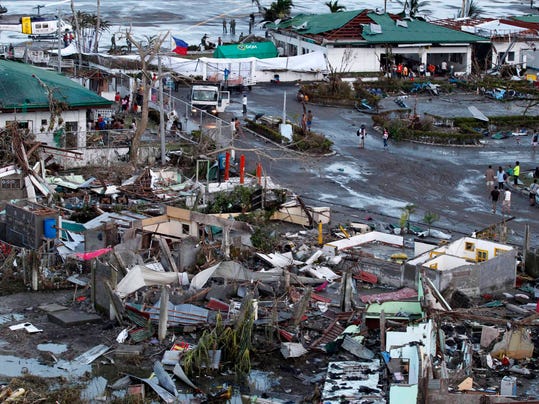
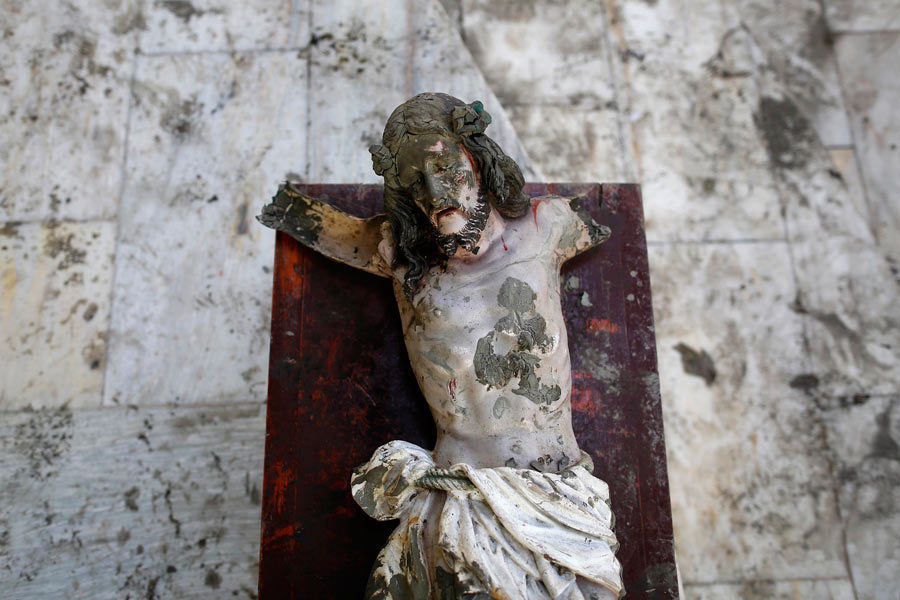
Typhoon Haiyan: 'This is God's punishment'... Rebuilding lives amid the ruins of the Philippines

http://www.independent.co.uk/news/world/asia/this-is-gods-punishment-rebuilding-lives-amid-the-ruins-of-the-philippines-8943209.html

Friday, December 6, 2013

 THE PROBLEM OF MATERIALISM


Lesson Text. Matthew 6:19-34.

Devotional Reading-Subject: Finding Contentment, I Timothy 6:6-11.

AIM: To learn to cope with the problems o this affluent society.

HOME READING

 Job, a Devout Rich Man, Job 1:1-5.
 Abraham, an Obedient Rich Man, Genesis 12:5-9.
 Two Kinds of Treasure, Matthew 6:19, 20.
 Wrong View of Riches, Matthew 18:16-22.
 The Rich Warned, James 5:1-6.
 Wrong Use of Wealth, Ecclesiastes 6:1, 2.
 God, the Supplier of All Things, Philippians 4:15-19.

  INTRODUCTION.-Materialism is a doctrine (false). It states that matter cause all life. It teaches matter is eternal; thus what man calls nature is the only god worthy of worship.
 Now the above paragraph seems farfetched for a believer to accept; yet materialism has become a very real part of the life and philosophy of many believers.
 Many worship the nature god by camping, hunting, fishing, sightseeing, etc. each Lord’s Day, rather than worshiping God with His churches.
 Others worship the dollar god by devoting all their ambition and energy to getting money and great possessions. More believers are in this category than one would like to admit.
 Of course, the Bible does not teach the accumulation of wealth by honorable means and motives is sin. It does teach the love of money is a sin (1 Tim. 6:10). That is a sin which the poor may commit, as well as the wealthy.

1. The Rewards.
 In These days of inflation even dedicated believers are more prone to dwell on material things more than they normally would. Still God’s people must be careful to place their ambitions and accomplishments in the proper place. Jesus said, “For where your treasure is, there will your heart be also” (Matt 6:21). The fact is, man is where his heart is, and his heart is where his treasure is.
 This brings up the matter of rewards. The Scriptures teach God bases all rewards on the believer’s faithfulness. “Moreover it is required in stewards, that a man be found faithful” (1 Cor. 4:2). Faithfulness is a divine requirement. That requirement cannot be met if a person’s heart s so wrapped up in material matters he does not have time for God. Thus, he would be a person with earthly treasures only.
 In other words, men who posses wealth must be careful or the wealth will posses them. Christ warned against such a tragic mistake. “Lay not up for yourselves treasures upon earth, where moth and rust doth corrupt, and where thieves worldly, approach to life has no durability. There can be no sense of security in materialism. Solomon who was the wealthiest man of his time, said, “Wilt those set thine eyes upon that which is not. For riches certainly make themselves wings; they fly way as an eagle toward heaven” (Prov.23:5). Wealth does not bring satisfaction, contentment, or security.
 On the other hand, Christ commanded His followers to have heavenly treasures. “But lay up yourselves treasures in heaven, where neither moth nor rust doth corrupt, and where thieves do not break through nor steal” (Matt. 6:20). Therefore, those who serve the Lord faithfully will have heavenly treasures. They do not allow themselves to be swept into the materialistic trend of this day. They have satisfaction, contentment, and security in the Lord Jesus.
                            
2. The Master.
 “No man can serve two masters: for either he will hate the one, and love the other; or else he will hold to the one, and despise the other; or else he will hold to the one, and despise the other. Ye cannot serve God and mammon” (Matt. 6:24). Materialism is a matter of selecting the wrong master to serve.
 “No man can serve two masters.” One can be a slave to only one master with undivided loyalty and service. Believers are suppose to be servants of Christ and righteousness” (Rom. 6:18). Those who claim to serve God; but live for Satan, are deceiving only themselves. It is impossible to be loyal and obedient equally to two rival masters.
 Believers must be careful whom they hate, love, hold to. And despise as their master. When one is true the opposite naturally follows. If a person loves God, he will hate Satan. Of he loves Satan, he will hate God. Holding to God as Master means one despise God. Moreover, one can see the matter of being loyal to the proper master is very critical. “Neither be ye called master: for one is your Master, even Christ” (Matt. 23:10).
 “Ye cannot serve God and mammon,” Mammon is a word which refers to earthly possessions. It applies to materialism, of which Satan is the master. It is possible to attend worship services regularly and still serve mammon. However, it is impossible to serve mammon without ceasing to serve God. Both God and mammon demand absolute loyalty.
 Covetousness is the common sin of those who serve mammon, The Lord warned against this sin. “And he said unto them. Take heed, and beware of covetousness: for a man’s life consisteth not in the abundance of the things which he possesseth” (Luke 12-15). Covetousness causes mammon to become the master; thus it takes the place of God. Consequently covetousness is idolatry (Col. 3:5).
                                  
3. The Necessities.
 Believers have to trust in God’s ability to provide the necessities of life. They must not trust in their riches, but in God’s riches. “But my God shall supply all your need according to his riches in glory by Christ Jesus” (Phil. 4:19). The problem is many are impatient in the matter of material things. Perhaps they feel God will not support in them in the manner in which they are accustomed to live. They want more than the necessities of life, and God promised only to provide the necessities.
 God will never let His people down. Mammon will. “I have been young, and now am old; yet have I not seen the righteous forsaken, nor his seed begging bread” (Psalm 37:25).
 Christ taught man is more important than the fowl of the air (Matt. 6:26). If God proved for birds, isn’t it logical He will provide for His own Children?
 Regarding raiment, Christ taught man is more important than “the lilies of the field” (Matt. 6:18-30). If God has provided so magnificently for flowers, will He overlook the need of His own children for clothing?
 Worrying about the necessities of life was a pagan characteristic. “(For after all these things do the Gentiles seek:) for your heavenly Father knoweth that ye have need of all these things” (Matt. 6:32). Therefore, materialism is a pagan trait.
 These promises of God are for His children. They are the only ones who have the power to serve God and refuse to serve mammon, The Lord repeatedly referred His hearers to their Father (1 John 5:1). Others have Satan as their spiritual father (John 8:44); therefore they are powerless to serve God and refuse to serve the god of mammon.
               
4. The Order.
 “But seek ye first the kingdom of God and his righteousness; and all these things shall be added unto you” (Matt. 6:33). Primary things must come first, then secondary matter, Spiritual matters are eternal in quality. Material things are temporal.
 The above passage should be the driving purpose in the life of a believer. It is an unparalleled principle by which only believers can live. Paul lived by this principle and was able to say, “I am crucified with Christ: nevertheless I love; yet not I, but Christ liveth in me: and the life which I now live in the flesh I live by the faith of the Son of God, who loved me, and gave himself for me” (Gal. 2:20).
 “Take therefore no thought for the morrow: for the morrow shall take thought for the morrow: for the morrow shall take thought for this of itself. Sufficient unto the day is the evil thereof” (Matt. 6:34). Here the Lord teaches His followers not to worry about tomorrow and all the future. The responsibilities of one day at a time are sufficient to keep a person busy. If one worries ahead, he is merely borrowing trouble. Each day has enough problems without borrowing more.
 Therefore, the believer should leave all the tomorrows in the hand of God. When tomorrow comes, He will provide every necessity for it.
 Many verses 33 and 34 show the Bible student what he needs to secure the present, assure the future regulate the life, and insure the spiritual character.

Put God first; others second; and self last.

Sometimes it looks like this:

J - Jesus First
O- Others
Y-You last!


Tuesday, December 3, 2013

Learn from Pastor Culley:"The General Assembly and Church of the Firstborn"

The General Assembly and Church of the Firstborn


By Roy W. Culley


As a young pastor I remember asking a gentleman, Sir, are you a member of a Baptist Church? No Sir, he replied, I am a member of the General Assembly and Church of the Firstborn, and that is good enough for me. Not knowing how to respond, I moved our talk on to safer subjects.

Since then, I found I was not alone in my ignorance about the true meaning of this expression in the KJV. Not a few of our respected fathers in the faith have wrongly interpreted it as referring to all of the redeemed after the first resurrection. Those who believe and teach the universal invisible church heresy naturally read that false concept into this expression with a big amen.
Please join me in a careful Bible study of the phrase and its context with a prayer for the Lord's help in discerning and rightly dividing His precious Word. The effort will be rewarding in exposing error and confirming basic biblical truth about the Lord's true churches.

The context of this expression, the 12th chapter of Hebrews, follows the inspired writer's call for the Hebrew believers to run the Christian race with endurance, looking unto Jesus and His blessed example. The writer called them to endure God's chastisement and warned that those without it are not sons. Then in verses 12-17 he urged them to respond to such discipline properly lest anyone should fall short of the grace of God and let bitterness spring up to trouble and defile many, like Esau, who so rashly sold his birthright. That thought paved the way for the writer to set forth, in verses 18-29, his final and strongest warning against anyone turning away from the Lord as some had already done.

The writer began his warning in verse 18 by reminding them of the awesome giving of the Law Covenant at Sinai, "For you have not come to the mountain that may be touched...."After expounding how terrifying that event was even to Moses, the writer moves on in verses 22-24 to explain the greater danger of refusing Him with Whom they now have to do, Who speaks from the true mount Zion in heaven.

Carefully notice that he began in verse 22 by saying, "But you have come to Mount Zion.."His thought is that in coming into the midst of the Hebrew Christian churches, they had spiritually come to heaven's highest authority. As God's executive agents for Kingdom business on earth, each New Testament church with Christ as Head presents and represents that ultimate authority.
Having said that the writer proceeded to lay down in seven fold completeness the fulness to which they had come by entering into the midst of the Lord's church and her blessed ministry. Since he was writing to Hebrews, the writer waxed poetic as a Hebrew by using the most common poetic pattern of expression, called synonymous parallelism, where the first line reinforces the same thought with an equivalent (appositional) expression in the next. Each of these seven expressions about where they had already come is set apart from the preceding one with the conjunction kai translated and unfortunately the KJV translators failed to give us their usually fine literal rendition of the Greek text by inserting the article where it is omitted by the Greek text, by translating the plural form of firstborn as singular, and by failing to rightly translate the dative case once. Please patiently observe the KJV in bold type and its departures from the literal Greek text as noted in plain text in parentheses. I am numbering the writer's seven descriptions of what coming to the heavenly mount Zion involved, underlining the equivalent parallel expressions for emphasis.

22 But ye are come unto mount Sion,
and 1) unto the city of the living God,
the heavenly Jerusalem,
and 2) to an innumerable company of angels,
23 To the general assembly (It is NOT the Greek word ekklesia rendered assembly here, but it is paneguris which occurs only here in the New Testament. In Isaiah 66:10 the Greek version renders a kindred word from the same root, keeping a festal holiday. Wuest's expanded translation rightly rendered it, to a festal gathering, without the definite article for there is no definite article in the Greek text. Consistent with the Hebrew writer's pattern of parallelism it is clear he is referring to a festal gathering of God's angels. Jesus told us there is celebration and joy in their presence when one sinner repents. Apparently the Catholic KJV translators were more intent on supporting their heretical concept of the universal church than conveying the plain meaning of this phrase.) and 3) church of the firstborn, (Apparently the Catholic zeal of the KJV translators, intensified by the King's warning against translating anything which might overturn the doctrine of his State Church of England, moved them not to render the dative ekklesia correctly as, to a church. It seems they choose to convey their heretical notion that the general assembly and church of the firstborn is the catholic (universal) church. By supplying a definite article before firstborn when there is not an article preceding the Greek plural number noun, prototokos, it seems they sought to convey that Christ's Church is a universal general assembly. Had the dative ekklesia and the plural noun been correctly translated, to a church of firstborn ones, no suggestion of a universal church would be given.)
which are written in heaven, and 4) to God the Judge of all, (the KJV translators supplied the article not in the Greek text. I wish they had put all supplied words in italics.)

and 5) to the spirits of just men (the KJV translators supplied the article not in the Greek text)
made perfect,

24 6) And to Jesus
the mediator of the new covenant, (the KJV translators supplied the article not in the Greek text)
and 7) to the blood of sprinkling, (the KJV translators supplied the article not in the Greek text)
that speaketh better things than that of Abel.

The Hebrew writer stated His application of verses 22-24 forcefully in verse 25, See that ye refuse not him that speaketh. For if they escaped not who refused him that spake on earth, much more shall not we escape, if we turn away from him that speaketh from heaven:

This study and analysis of the text and context of the widely misunderstood subject, The General Assembly and Church of the Firstborn, makes it clear that the inspired writer spoke NOT of one but of two different kinds of assemblies. The first is the festal gathering of the holy angels who celebrate the repentance of each sinner entering the Kingdom. The second is an earthly assembly of the scripturally baptized saints whose names are written in heaven. The two groups are separated by the conjunction, as are each of the seven parallelisms. Different Greek words were used to describe them. Also their parallel descriptions make it clear enough that the first is an assembly of angels, while the second is a New Testament church assembly of saints.
It should also be observed that the inspired writer to the Hebrews was Not referring to any future gathering of all the redeemed. That he made perfectly clear by not saying you shall come, but you have come to Mount Zion. There will be a gathering of all the redeemed into one fold according to the Good Shepherd, John 10:16, but that is still future.
Brethren let no one deceive you. Jesus is still building only the one kind of church which He personally instituted during His personal ministry. As our ABA doctrinal statement #17 biblically declares, it is always and only a local visible assembly. It is not both a local assembly and an invisible body of all saints nor a forming body of saints which is not yet formed. Let us stay with the simplicity of the truth as it is in Christ Jesus and speak as best we know how as do the oracles of God. Let all of those who are unwilling to do so be honorable enough to join an association of Baptist who believe as they do, and not persist in undermining the faith of our weaker brothers.